

Autism Dating Community

An autism dating app that skips the guessing games

Plain language. Clear intent. No decoding body language on a first date. A dating space built by and for autistic adults - where "I need a quieter place to talk" is a green flag, not a negotiation.

See How It Works

Free to join. No credit card. No mandatory voice or video.

Level 1 Level 2 Late-diagnosed AuDHD Sensory-aware
Autistic woman in lavender sweater relaxing at quiet cafe window seat on autism dating app
Neurodivergent-first Built with autistic input
Text-forward chat No forced voice or video
Low-pressure pacing Reply when you can
Unmask welcome Come as you are
Dating while autistic

Dating with autism: the honest version

Not inspirational. Not tragic. Just the actual texture of dating while autistic - and what a platform built around it should do differently.

Dating with autism is usually easier in the parts everyone assumes will be hard and harder in the parts everyone assumes will be easy. Picking a shared interest? Often easy - autistic people tend to have real, deep interests worth talking about. Reading whether someone is flirting, bored, or just tired? That's the part mainstream apps never help with.

A New Patterns ABA overview from May 2025 put it plainly: autism dating has specific opportunities and specific friction points, and both deserve a platform that names them honestly. Here are the friction points most autistic members tell us about within the first week of joining.

  • Body-language bingo. Mainstream apps reward quick read-the-room signals. For many autistic daters, that's a language spoken without a dictionary.
  • Sensory ambushes. "Let's grab drinks" at a loud bar with flashing lights is a first date that ends before it starts.
  • Unclear intent. "We should hang sometime" is not a plan. It is a puzzle. Plans are easier to say yes to.
  • Masking tax. Every swipe, every small-talk volley, every forced eye-contact selfie uses energy that doesn't grow back.
  • Sudden plan changes. "Actually let's move it to 9pm downtown" can dissolve a whole evening before the first hello.

Here's the thing: none of those are deal-breakers in a platform that accounts for them. Text-first chat, clear sensory filters on date plans, and a culture of saying what you mean turn all five into non-issues. That's the whole design brief.

For the other side of the conversation - what a supportive partner looks like - see our piece on partner expectations and the blog on emotional compatibility. Both were written with neurodivergent readers in mind.

Sensory-friendly

Sensory-friendly date ideas that feel good

Low-stimulation doesn't mean low-effort. These six formats are quiet, predictable, and honestly more fun than loud bars - with or without an autism diagnosis.

Quiet cafe, off-peak hours

A small cafe at 10am or 3pm - not the lunch rush. Fewer voices, gentler lighting, a seat by the window. You can actually hear each other think. Pick the place before the date so no one is deciding on the curb.

Low volumePredictableShort
Slow walk in a park

Side-by-side walking skips the eye-contact pressure of a face-across-a-table date. You can pause when a dog walks by and that's the whole conversation. Bring water, set a time limit (45 minutes is plenty), and loop back to the start.

OutdoorsNo forced eye contactMovement

Aquarium on a weekday

Soft lighting, predictable paths, built-in conversation topics swimming by every few feet. Many aquariums offer sensory-friendly hours with lower crowd caps and dimmed audio - worth checking before you book.

Sensory hoursTopic-richQuiet-ish

Home movie with a stop time

Pick a short film, agree on a finish time, and keep subtitles on. Knowing exactly when the date ends is a small kindness. Skip the "what should we watch" scroll-paralysis - decide before they arrive.

Low stimulationDefined endSubtitles

Small museum or gallery

A single-gallery exhibit beats the mega-museum sensory marathon. Wander separately for ten minutes, regroup, compare favorites. Built-in silences are allowed - encouraged, even.

Small spaceSilence OKShared focus

Boba or dessert stop

Twenty-minute low-stakes format. Order, sit, sip, go. No three-course commitment, no dinner-volume restaurant. A great second-date test if the first date hit its time limit and you both wanted more.

ShortCasualStim-friendly

See fifteen more quiet date ideas - the full list was written with autistic, ADHD, and chronically ill daters in mind.

Clear communication

Communication preferences front and center

The accommodations that actually help autistic relationships are small, specific, and repeatable - direct language, written backup, and permission to say "I don't know yet."

Preferences worth naming early

  • Text-first for the first week or two
  • Voice notes over live calls
  • No sudden video requests
  • Heads-up before plan changes
  • Short messages are fine - they're not cold
  • "I need to think about that" is a full reply

Scripts you can copy

"I do better with texting for the first bit - is that okay with you?"

"I'm enjoying this. I'm also at my energy limit. Can we pick this up tomorrow?"

"I missed the tone there - were you joking or serious? Not a big deal either way."

"I want to say yes, and I need 24 hours to think about it. Is that okay?"

What does this mean in practice? An autistic dater who says "I need the plan by Tuesday" is not being rigid - they are handing you a gift. A partner who can answer "yes, Saturday at 2pm, the cafe on Elm, ninety minutes" is showing up in the exact way their date needs. No decoding required on either side.

For longer-form communication patterns - active listening, conflict scripts, weekly check-ins - our guide to communicating better in a relationship has a whole section on neurodivergent adaptations.

Unmask welcome

You don't have to mask here

Masking - forcing eye contact, suppressing stims, rehearsing small talk, flattening your voice - is the exhausting performance autistic adults often give to pass on mainstream apps. It's also the fastest way to end up in a relationship that doesn't know you.

If you had to mask to match with them, you didn't match with them - you matched with the version of you that could. - A current autistic member, paraphrased with permission

What unmasking looks like on a profile

Stim in your photos if you want to. Mention your special interest in the first line instead of burying it in "I'm pretty chill." Say "I don't do small talk" if you don't. List your sensory no-gos. Note that you prefer text, or voice notes, or in-person-only. Every one of those details helps the right person find you and filters the wrong one out before you've spent a single minute of energy.

A 2023 study in Autism journal found autistic adults consistently rated relationships with other autistic partners higher on understanding, fewer misunderstandings, and lower masking pressure than relationships with neurotypical partners. That finding isn't a rule - plenty of autistic members date neurotypical allies happily - but it's a reminder that a platform where both people can drop the performance changes the math.

If you're rebuilding confidence after years of masking, our post on confidence and self-acceptance was written exactly for that corner of the journey.

Featured profiles

Sample profiles showing how autistic members actually write about themselves here. Direct, specific, and refreshingly unpolished.

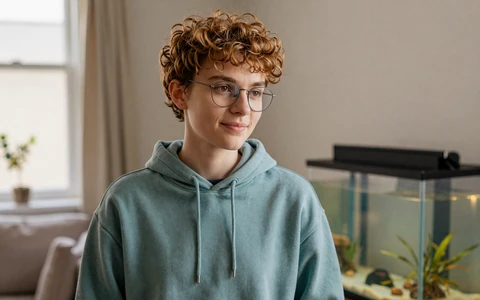
Rowan, autistic non-binary member beside aquarium on autism dating site

Rowan, 28

Level 1 autistic ยท Seattle, WA

Special interest: marine biology and the history of lighthouses. Text-first, voice notes after week two, calls only when a plan needs deciding. Looking for someone patient who doesn't take short replies personally.

Marine biologyText-firstLate diagnosed
Mei, AuDHD member cross-stitching in sunlit library nook

Mei, 34

AuDHD ยท Portland, OR

Librarian by day, cross-stitch hyperfocus by night. Needs sensory-friendly venues and heads-up before plan changes. Dating as an adult after a late diagnosis last year - honest about the learning curve.

Cross-stitchAuDHDSensory-aware
Derek, autistic man relaxing on porch at golden hour

Derek, 41

Autistic ยท Denver, CO

Software engineer, dad of one, divorced after a long marriage that ended kindly. Prefers planned dates over spontaneous ones. Still figuring out flirting - and saying so out loud on the profile instead of pretending.

PlannerDadDirect
Practical steps

Simple strategies for autistic daters

Borrowed from what's actually worked for current members and from the UCLA PEERS social-skills curriculum for autistic adults. Seven small moves, nothing performative.

  1. Name two boundaries before you chat

    Write them down - "no surprise video calls" and "no bars louder than conversation level" is enough. You're not being difficult. You're being easy to date.

  2. Use text as your primary mode

    Online dating lets you communicate at your own pace. There's nothing wrong with needing twenty minutes to craft a good reply. That's not a red flag - that's a considered human.

  3. State your intent in the profile

    "Looking for a long-term partner" or "taking it slow, open to friends-first" saves everyone from the date-three ambiguity talk.

  4. Plan the whole first date in writing

    Place, time, duration, how you'll get there, how you'll leave. Autistic daters consistently report a first date goes better with ninety percent pre-planning than with any amount of charm.

  5. Ask, don't guess

    "Is this a date or are we hanging out?" is a brave and efficient sentence. Most people will respect it. The ones who won't have just told you something useful.

  6. Build in a recovery window

    If a first date ends at 4pm, don't plan anything social for the rest of the day. Social spoons are finite. Protect them on purpose.

  7. Lean on your people

    Friends, family, a therapist, a peer support group, or an autism-specific dating coach. Outside perspective helps with post-date replay spirals. Not everything needs solving in your own head.

Many autistic members also browse these nearby communities. One account, every category open to you.

ADHD Dating

The other half of AuDHD. A category built around working-memory-friendly chat, shared energy patterns, and the reality that two ADHD brains often communicate very well - once the timers are set.

AuDHD overlapText-forwardHonest
Meet ADHD singles

Dating with PTSD

High overlap with autistic trauma histories, especially for late-diagnosed adults. Trauma-informed dating, gentle pacing, triggers respected, no pressure on disclosure.

Trauma-informedSlow pace
Meet PTSD singles

Bipolar Dating

Another neurodivergent community with strong shared ground around routines, communication during episodes, and partners who show up predictably. Worth a look.

NeurodivergentStability
Meet bipolar singles
FAQ

Autism dating FAQ

The questions prospective autistic members most often ask before creating a profile.

What is the best dating site for autistic people?

The best autism dating site is one with text-first messaging, low-pressure pacing, no mandatory voice or video, and a community where unmasking is welcome rather than penalized. Hiki was built specifically for autistic adults, Dateability is broadly disability-inclusive with strong autistic membership, and Modern Dating sits in that same category - free to join, neurodivergent-designed, and built around clear communication rather than swipe-speed decisions.

Where can I meet autistic singles?

Online is usually the most practical starting point for autistic adults - online dating lets you communicate at your own pace, skip crowded first-meeting venues, and filter for shared neurotype. Dedicated autism dating apps and disability-inclusive platforms like Modern Dating are the highest-density spaces. Autism-specific meetups, special-interest groups, social-skills programs like UCLA PEERS, and online neurodivergent forums are strong in-person and community-based alternatives.

Is this autism dating app really free?

Yes. Joining, browsing, and messaging are all free with no credit card required. An optional premium tier exists for extras like advanced filters - but every feature you need to actually meet someone is free forever. We refuse to put a paywall between disability-income members and connection.

Do I have to disclose that I'm autistic?

No. Disclosure is optional. Many members put "autistic" directly in their profile because it filters for compatibility faster than any algorithm could; others prefer to mention it in chat or in person. The optional deets field lets you tag neurotype, sensory needs, and communication preferences only if you switch it on - editable any time.

Can non-autistic people join this autistic dating community?

Yes, if you're a respectful ally genuinely open to dating an autistic person. Allies who treat autism as an obstacle to be managed, a fetish, or a "cause" are not welcome. Allies who understand that clear communication and sensory planning are relationship skills, not special requests, absolutely are.

What if I'm late-diagnosed or self-identified?

Both are welcome here. Late diagnosis in adulthood is common - especially for women, non-binary people, and people of color who were often missed in childhood screening. Self-identified autistic adults who haven't pursued formal diagnosis (which is expensive and inaccessible for many) are equally welcome. You set the terms of your own identity on your own profile.

Join at your own pace

Build a profile when you have the energy. Reply when the words come. Meet someone who doesn't need you to mask. The autism dating community is free to join and already chatting.

See How It Works

Free to join. No credit card. No mandatory voice or video.