Inclusive dating · 6 min read

Inclusive dating advice that actually respects who you are

Dating with a disability shouldn't mean shrinking yourself to fit someone else's idea of lovable. This is the guide we wish we'd had - ten principles, warm profile tips, and first date guidance built with the disability community.

By the Modern Dating editors Updated April 2026 Finding love with a disability
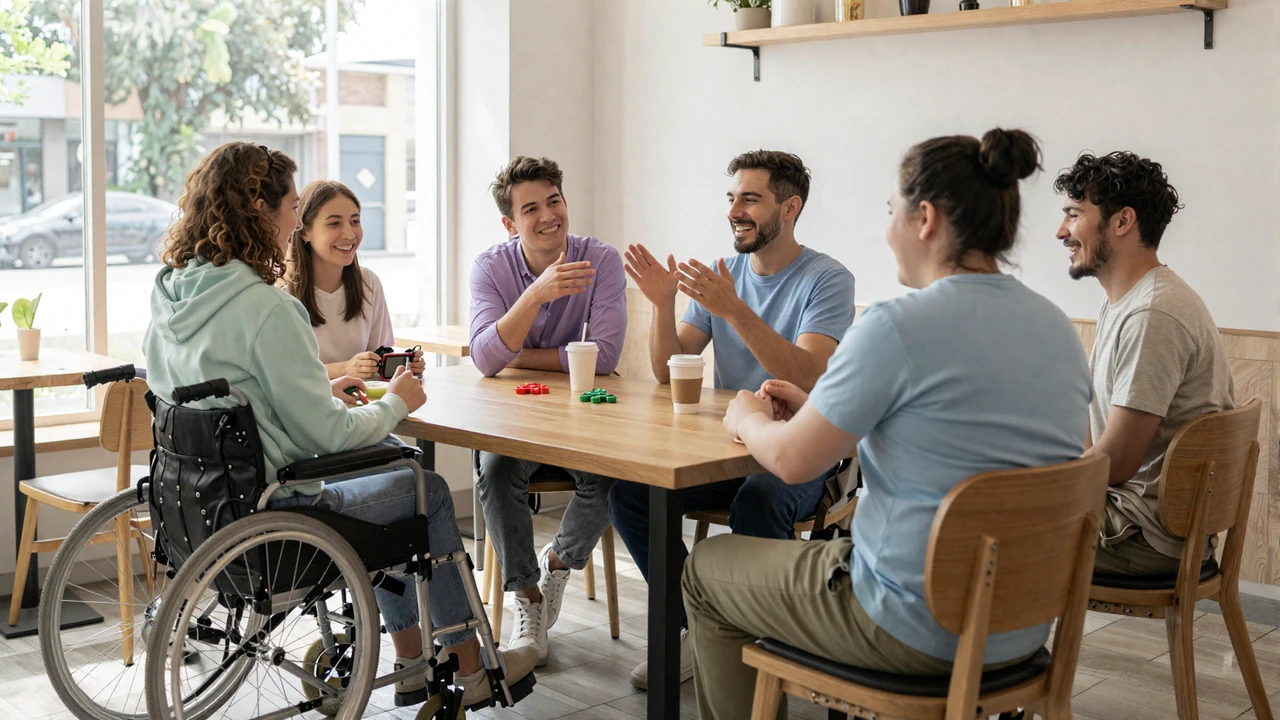
Diverse group of disabled friends laughing together at a bright cafe, representing inclusive dating community

The short version

  • Lead with you. Your profile is not a medical chart - it's an invitation. Share interests first, disability on your terms.
  • Pace is yours. Slow replies, clear boundaries, and "let's meet next month" are all valid dating speeds.
  • Access is romance. A partner who asks about your accessibility needs before the first date is already showing up.

Dating with a disability is often framed as a problem to solve. It isn't. Finding love with a disability works the same way it works for anyone else - you meet people, you notice who feels good to be around, and you protect your peace along the way. What's different isn't the love part. It's the noise around it: ableism, fetishization, mainstream apps that weren't built for your body or brain, and a culture that still treats disabled adults like they shouldn't want romance at all.

This guide pulls together what the community already knows and what platforms like Modern Dating are built around. Whether you're a wheelchair user, autistic, Deaf, chronically ill, a veteran with PTSD, or an ally loving someone with a disability, these principles translate. Use what fits. Skip what doesn't.

10 inclusive dating principles to live by

Inclusive dating is the practice of approaching romance without ableism - treating disabled people as full romantic partners rather than inspiration, charity, or a fetish. These ten principles cover both sides of the screen: how to date as a disabled person, and how to show up as a partner or ally.

  1. Disclosure is always your choice

    You never owe a stranger your diagnosis. Share when it feels safe - in the profile, in messages, before a first date, or months in. The right person waits. On Modern Dating, optional disclosure fields let you share on your timeline, not anyone else's.

  2. Lead with interests, not limitations

    A profile built around baking, K-dramas, and adaptive climbing tells a fuller story than one that opens with "I have cerebral palsy." Disability is part of you. It isn't your whole dating pitch.

  3. Assume the other person is an adult

    Ask what they need. Trust what they say. Don't push wheelchairs that haven't asked to be pushed, don't speak for Deaf partners, and don't reroute autistic communication into "normal" scripts. Respect is the baseline.

  4. Accessibility is romantic

    Picking a venue with a ramp, a quiet corner, or a well-lit room isn't a chore - it's care. The question "what would make this easy for you?" belongs on every first date.

  5. Slow is a feature, not a flaw

    Chronic illness, anxiety, PTSD, low spoons - all reasons you might reply tomorrow instead of tonight. A good match reads slow replies as rhythm, not rejection.

  6. No devotees, no fetishizers, no exceptions

    If someone opens with your disability as the thing they find hot, that's a red flag. Block, report, keep moving. Our safety team removes these accounts on first report.

  7. Identity-first or person-first - you pick

    Some people say "autistic person," others say "person with autism." Some capitalize Deaf, others don't. Mirror the language the person uses about themselves. Don't correct it.

  8. Consent is a conversation, not a checkbox

    Consent covers touch, pace, meeting in person, sharing photos, and disclosing to friends. Ask before helping. Ask before hugging. Ask before posting a couple photo online.

  9. Accessibility tech is table stakes

    Screen reader support, captioned video, high-contrast text, large tap targets, and keyboard navigation should come standard - not as "pro features." If an app hides accessibility behind a paywall, it doesn't want you.

  10. Your love life is yours

    Not your caregiver's, not your parents', not your doctor's. Disabled adults are allowed to want casual, serious, queer, kinky, monogamous, poly, or none-of-the-above relationships - same as anyone else.

Profile craft

Profile tips that lead with you

Short, honest profiles outperform long ones every time. Build yours around three simple prompts - what you enjoy, what you're like, and what you're looking for.

I enjoy

Name three things, not thirty

"Music, horror movies, and making pasta from scratch" lands better than a scroll-length hobby list. Specific beats exhaustive - one detail someone can ask a follow-up about is worth ten generic adjectives.

Be specificInvite questions
I am like

Three adjectives that feel true

"Calm, dry-humor, soft-hearted" tells a reader how you feel to be around. Avoid filler like "laid-back" or "down for anything." If a stranger couldnt guess it, it doesnt belong here.

Show, dont sellHonest over polished
I am looking for

Say the quiet part out loud

Friendship first? A serious partner? Someone chill about chronic fatigue days? Write it plainly. Clarity filters out mismatches before a conversation ever starts.

Clarity is kindnessFilter in, not out

Photo rule of thumb

One clear face photo plus one everyday photo is enough. Face so people recognize you when you meet; everyday so they see your actual life - your dog, your adaptive gear, the coffee shop you haunt. Skip the sunglasses-only shots and group photos where no one can tell which person is you.

First date guidance that lowers the stakes

The best first dates are short, accessible, and easy to leave. You're not auditioning for a marriage - you're checking whether a real-life hour together feels better or worse than the texting did. Keep it low-pressure.

  • Pick one activity, one hour. Coffee, boba, a mocktail, a short museum visit. If it's going well, you can extend. If it's not, you're done in sixty minutes with dignity intact.
  • Ask about access before you pick the venue. "Any step-free or quiet-space preferences?" is the single most considerate sentence in inclusive dating. Do it every time.
  • Share logistics ahead. Parking, door width, menu link, sensory notes (loud music, bright lights). Surprise is romantic later - not on a first meeting.
  • Pick daytime and public. Daylight, other humans around, a staffed venue. Tell a friend where you'll be and when you expect to leave.
  • Have an exit line ready. "I've had a lovely time, I'm heading home to rest." No justification required. Energy is finite and protecting it is adult behavior.

If you're the non-disabled partner planning the date, let your match lead on venue and timing. Being asked about accessibility needs is often cited as the single clearest sign of a considerate partner - don't skip it because you're worried about "saying the wrong thing." Asking is the right thing.

An anti-ableism mindset, for you and partners

Ableism in dating shows up in patterns disabled daters recognize instantly: being treated as a trophy of someone's open-mindedness, fielding invasive medical questions on a first chat, getting ghosted the moment you disclose, or having your disability turned into a fetish. Mainstream apps are where most of this happens - not because their users are uniquely cruel, but because the design rewards fast, shallow interactions.

You are not a lesson anyone has to learn. You are a person someone gets to date. - From a reader letter, Modern Dating community

Loving someone with a disability means resisting the reflex to narrate their life back to them. You don't need to say "you're so brave" for going to dinner. You don't need to tell friends a "special" story about your partner's body. You just date them - the way you'd date anyone - and let them define what their disability means in the relationship.

For disabled daters, the harder work is often interior. Internalized ableism - the quiet belief that you're asking for too much, or should be grateful for whatever shows up - can shrink your standards before you ever open the app. Our guide on confidence and self-acceptance goes deeper there. Short version: you are allowed to want a partner who actively wants you, not one who is tolerating you.

Keep reading
Confidence

Confidence & self-acceptance

Rebuilding romantic confidence after diagnosis, injury, or a string of bad dating experiences - without forcing positivity.

Internalized ableismSelf-worth
Read the guide
Communication

Communicate better in a relationship

Active listening, weekly check-ins, and adaptations for ADHD and autistic communication styles.

NeurodivergentScripts
Read the guide
Safety

Online dating safety tips

Verification, red flags, the never-send-money rule, and how to spot devotees before they drain your energy.

Red flagsReporting
Read the guide

Looking for your specific community? Jump into wheelchair dating, autism dating, the Deaf community, or browse all 12 on the homepage.

Ready to try dating that fits?

Start a free profile on a disabled dating site built around pace, consent, and real community - not swipes and paywalls.

See How It Works

Free to join. No credit card required. Built with the disability community.