
Classic
Specialty coffee shop
Call ahead for step-free entry and table height. Morning slots are quieter for sensory-sensitive daters and easier on fatigue.
Step-freeShort by designQuiet morning
Accessibility is not a ramp at the door and a clap on the back. It's the texture of a whole date - from the app you met on to the chair at the table to the question your partner asks before you show up.
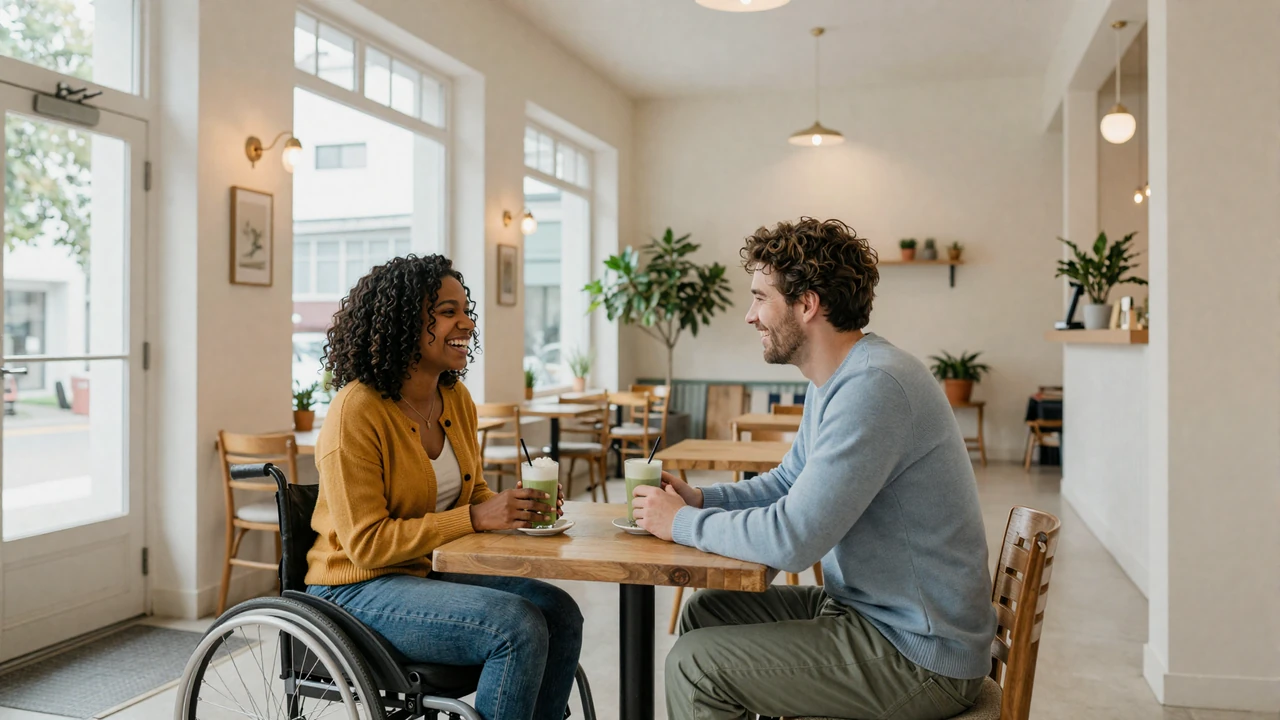
Accessibility in dating is the practice of designing a romantic encounter - from the first swipe to the last goodbye - so a disabled person can show up fully, not a stripped-down version of themselves. It is never one feature. For a wheelchair user, it might be a step-free entrance and a table with leg clearance. For a Deaf dater, it might be a well-lit venue where lip-reading works and a partner who is comfortable using text chat mid-date. For an autistic person, it might be a quiet room, a known menu, and the freedom to skip small talk.
The common thread is honesty about what is actually required for someone to participate, not the performance of effort. A loud rooftop bar with one "accessible" bathroom three floors away is not accessible even if the listing says so. A dating app with beautiful UI but no alt text on profile photos is not accessible to a blind user - it is a locked door with a welcome mat.
Accessibility is what turns "I want to meet you" into "you can actually be here." Everything else is marketing. - From a Modern Dating community roundtable
This is also why the best dating sites for people with disabilities don't bolt on access features at the end. They build filters, disclosure options, and assistive-tech support from day one, because the audience they serve cannot log in without them.
When mainstream apps ignore access, the cost is not just inconvenience - it's isolation on a population scale.
Low-pressure, low-stimulation, easy-to-leave. Six first-date formats that work for most bodies and most brains.
Call ahead for step-free entry and table height. Morning slots are quieter for sensory-sensitive daters and easier on fatigue.
Great for sober daters, autistic regulars who prefer known menus, and anyone on medication that clashes with alcohol. Bright, casual, easy to linger or leave.
Wide smooth paths, benches every 100 feet, and room for service dogs. Check rental wheelchair availability at the entrance.
Built-in conversation, built-in exits, often excellent accessibility. Ask about sensory-friendly hours and audio descriptions.
Open-caption screenings are spreading fast. VR arcades are good for side-by-side play with low talking pressure and high shared novelty.
Gold standard for chronic illness, rural singles, and anxious first-timers. Turn on captions, pick a quiet room, keep it to 30 minutes.
More low-stim formats in our quiet date ideas for introverts guide.
A dating app is the first venue. If a blind user can't navigate it, they never reach the coffee shop. Screen readers - JAWS, NVDA, VoiceOver, TalkBack - announce on-screen content aloud, but they rely on the app doing its homework: meaningful alt text on every profile photo, labeled buttons, a logical tab order, and no UI that hides behind gestures alone.
Captioning is the equivalent for Deaf and hard-of-hearing daters. Live captions on video chat, accurate transcripts on voice notes, and well-lit video that preserves lip-reading are non-negotiables, not premium add-ons. The best online dating sites for disabled users treat these as baseline.
Partners can help here too. When you post photos, write a short description of each ("me in a red jacket on a hiking trail, grinning") so your screen-reader-using match knows what they're looking at. It takes ten seconds and makes you unforgettable.
Visit our blind dating category and Deaf community pages for more.
The difference between a great first date and a disaster is usually forty-five seconds of planning. Walk through these five steps before you confirm a time, whether you're the disabled partner or the ally.
"Is there a venue type or time of day that works best for you?" Being asked about access needs before a first date is one of the clearest early signs of a considerate partner. Don't skip it to seem casual.
Listings lie. Call the coffee shop, check for step-free entry, accessible restrooms, and table clearance. For Deaf dates, confirm lighting. For autistic dates, confirm noise levels.
Plan for 45-60 minutes, not "the whole afternoon." A clear end lets chronically ill and anxious daters show up fully. You can always extend on purpose.
Exact address, entrance to use, parking or transit notes, time. Text, not a phone call. Reduces cognitive load and makes rescheduling painless if a flare hits.
"If either of us isn't feeling it day-of, we can reschedule with zero hard feelings." This single sentence removes the pressure that ruins most first dates.
Three habits that separate a respectful date from an exhausting one. Steal them shamelessly.
Don't push a wheelchair, guide a blind person by the arm, or speak to the interpreter instead of the Deaf person. Ask first: "Would you like help, and if so, how?" Then follow the answer.
Your date knows their body and brain better than you do. If they say a venue won't work, believe them the first time. If they want to skip disclosure details, respect it. No amateur doctor energy.
"Is the lighting okay?" "Want to move to a quieter corner?" "Need a break?" Soft check-ins land as care, not pity, when your tone is casual and the option is genuine.
Ten principles for dating with a disability - disclosure, pace, and an anti-ableism mindset for both partners.
Active listening, neurodivergent adaptations, conflict scripts, and a weekly 20-minute check-in ritual that actually works.
Verification, red flags, never-send-money rule, and how to spot devotees and fetishization before you meet in person.
Browse communities on our wheelchair dating, autistic dating, or cerebral palsy dating pages.